
December 21, 2024
Single-Page Application
A Single Page Application (SPA) is a web application that loads a single HTML page. SPAs use JavaScript to render content, providing a seamless and responsive user experience without full page reloads.
Drishti, Manager - Digital Marketing

Table of Contents
- What is a single-page application?
- SPA architecture and its working
- When should you use single-page applications in retail?
- Single-page applications vs. multi-page applications
- Benefits of single-page applications
- Challenges of single-page applications
- Conclusion
What is a single-page application?
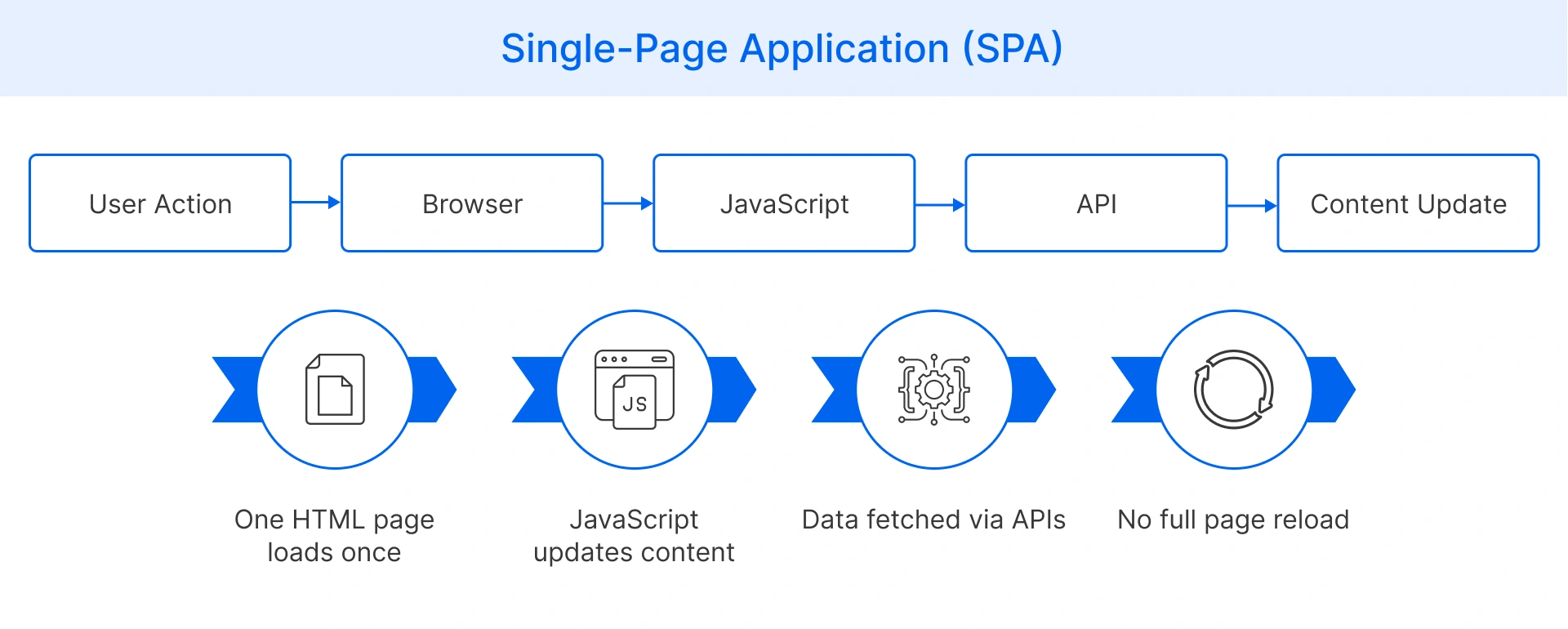
A Single Page Application (SPA) is a web application that functions within a single webpage, enhancing the user experience by loading all necessary resources when the page is initially opened. Instead of reloading the entire page when the user interacts with it, SPAs dynamically update the content through JavaScript and Application Programming Interface (API) calls.
This approach allows for faster interactions, reducing load times and providing a seamless, app-like experience. Such applications are ideal for platforms requiring high interactivity, such as social networks like Gmail and Slack, and offer benefits like improved speed, responsiveness, and cross-platform compatibility.
How do single page applications work?
SPAs rely on dynamic updates rather than full-page reloads to improve user experience by loading only necessary content. Here is a breakdown of how SPAs work:
- Initial Load: SPAs initially load a single HTML file along with the required assets, such as JavaScript and CSS files. This provides the basic structure and style for the application.
- Data Management: JavaScript frameworks and APIs manage data transmission with the server. This separation of client-side and server-side development improves scalability and reduces web server load by minimizing multiple server queries.
- User Interaction: When users interact with the app, it retrieves new content asynchronously without refreshing the entire page. Techniques like AJAX and JSON are used to fetch the necessary data, ensuring performance and responsiveness.
- Cross-Platform Compatibility: SPAs work across various platforms, ensuring cross-device compatibility in users' browsers. This makes SPAs ideal for highly interactive platforms like Trello, Pinterest, and Google Maps, which frequently update content for a seamless experience.
SPAs use techniques like AJAX and JSON to fetch necessary data without reloading the page, significantly enhancing performance and responsiveness. When an event occurs (e.g., user interaction, data change, or scheduled task), the serverless platform identifies the relevant function and executes it in a stateless environment. This seamless interaction ensures that single-page applications are loaded as expected, providing a continuous and engaging user experience.

When should you use single-page applications in retail?
SPAs are beneficial in retail when a seamless, interactive user experience is essential. They are a good choice for e-commerce platforms requiring dynamic content updates without reloading the page, such as product filtering, cart updates, and personalized recommendations. SPAs enhance performance, speed, and engagement, especially for mobile users, offering a smooth shopping experience across devices.
However, SPAs may not be suitable for SEO-heavy retail websites, as search engine crawlers may struggle with indexing dynamic content. Retail sites with a large number of static pages may benefit more from multi-page applications (MPAs), which better support SEO and large-scale content management due to easier indexing and preview capabilities.
Single-page applications vs. Multi-page applications
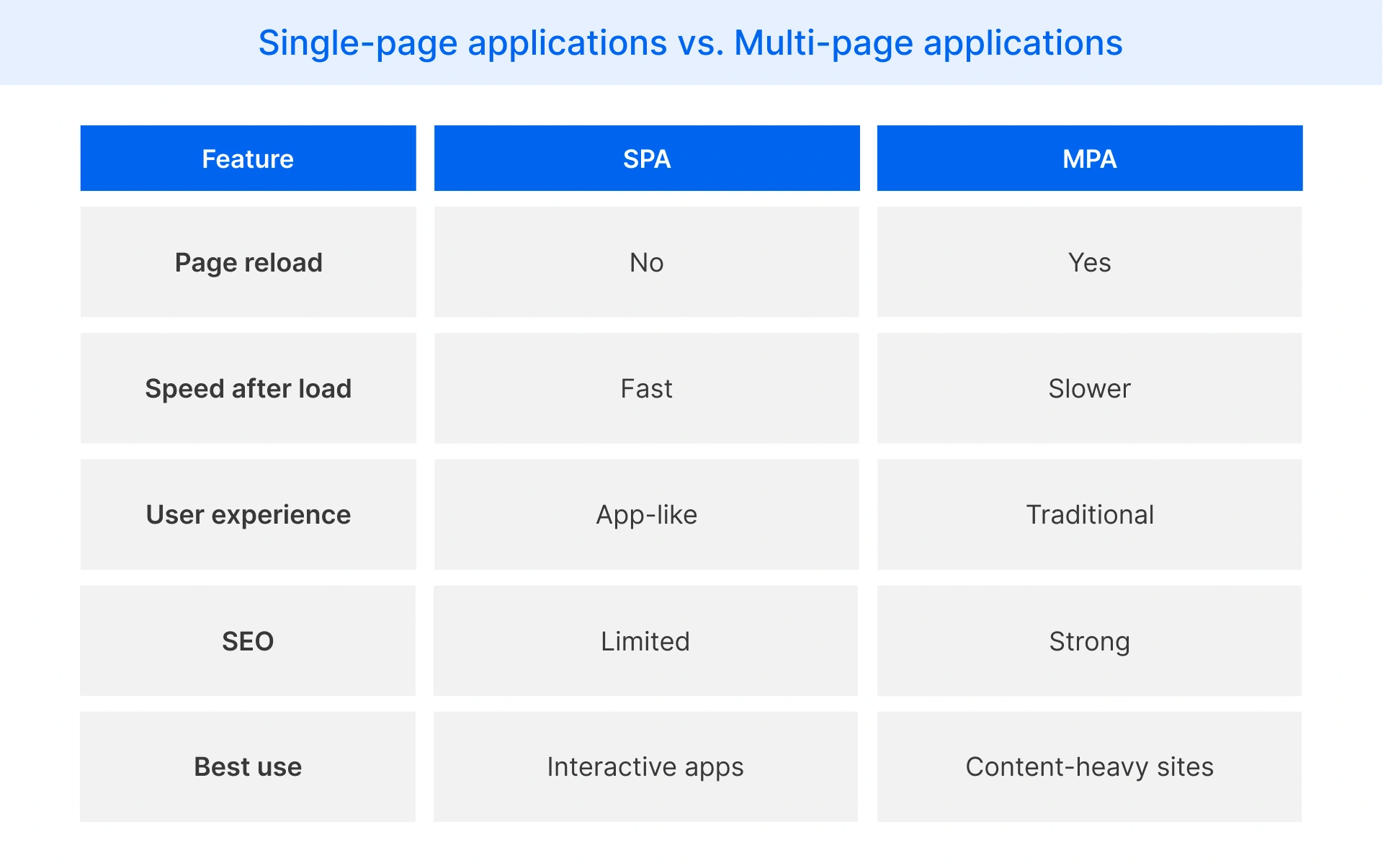
Single-page applications (SPAs) and multi-page applications (MPAs) differ in their architecture and use cases. SPAs update the content dynamically as users interact with it, offering faster load times and a smooth, app-like experience. This quality makes them suitable for applications requiring frequent user interaction, like e-commerce sites or social media platforms. However, SPAs have limitations in SEO and complex content management.
In contrast, MPAs load a new page for each interaction, making them better suited for websites with extensive content, like blogs or news sites. MPAs are more SEO-friendly because web crawlers individually index each page, but they tend to have slower load times due to frequent page reloads. Additionally, MPAs simplify navigation for complex websites, while SPAs require more sophisticated management for elements like the back button.
Benefits of single-page applications
SPAs offer numerous benefits for web development, enhancing user experience and performance. Here are some of the key benefits they offer:
- Faster Load Times: SPAs load only the necessary content, reducing initial load times and making the application more responsive.
- Improved User Experience: With no page reloads, SPAs provide a seamless and smooth user experience akin to native mobile apps.
- Simplified Development: SPAs streamline development by using a single codebase for both client and server, making it easier to maintain and debug.
- Enhanced Performance: By fetching data asynchronously, SPAs minimize data transfer and reduce server load, leading to better performance.
- Cross-Platform Compatibility: SPAs use a single codebase, enabling easy adaptation across different devices and platforms, such as mobile phones and desktops.
Challenges of single-page applications
SPAs offer numerous benefits, but they also come with challenges that need careful consideration. Here are the main challenges that this method presents:
- Search Engine Optimization (SEO): SPAs struggle with SEO since they dynamically update content, making it difficult for search engines to index individual pages.
- Initial Load Time: While SPAs load quickly after the initial page load, the initial download of all necessary assets can be slow, impacting user experience.
- Browser Compatibility: Maintaining consistent performance across multiple browsers and devices can be difficult due to differences in JavaScript engine capabilities.
- Security Risks: SPAs are more exposed to security vulnerabilities, such as cross-site scripting (XSS) attacks, due to their heavy reliance on client-side JavaScript.
- Memory Management: Improperly managed JavaScript processes in SPAs can result in memory leaks, slowing down the application and affecting performance.
Conclusion
Single-page applications (SPAs) offer significant advantages, including faster load times, enhanced user experiences, and cross-platform compatibility, making them ideal for interactive e-commerce platforms. However, SPAs also come with challenges, such as SEO limitations, JavaScript dependency, and security vulnerabilities.
While they are well-suited for dynamic, high-interaction environments, developers must carefully manage their drawbacks to ensure optimal performance and security. Proper implementation can provide a smooth, app-like experience across devices, significantly improving user engagement.

FAQ
Optimizing user experience in a SPA involves several key strategies. First, minimize initial load times by deferring non-critical resources and using code splitting. Implement lazy loading to load only necessary resources as needed. Use smooth animations and transitions to deliver a fluid experience. Ensure cross-browser compatibility and responsive design for accessibility on various devices. Finally, optimize data fetching and implement caching strategies to reduce load times and improve performance.
Single page application examples include popular platforms like Gmail, Pinterest, and Google Maps, which update content dynamically without refreshing the browser. These applications provide a continuous flow by fetching data in the background. Flipkart Commerce Cloud enables retailers to build similar high-performance interfaces that keep users engaged during complex digital shopping tasks.
A single page application simply is a web app that loads one HTML document and updates content via JavaScript as users interact with it. Unlike traditional websites, an SPA does not require a browser refresh to navigate between different sections. Modern developers often use advanced API integrations to power these seamless, real-time updates that maintain a steady application state.
Whether an SPA or MPA is better depends on your specific goals for interactivity or search engine discovery. SPAs excel at providing a smooth, app-like experience for dashboards, while Multi-Page Applications (MPAs) suit massive ecommerce catalogs. Flipkart Commerce Cloud offers the technical flexibility to help brands choose the right framework for their unique retail objectives.
SPAs are still relevant compared to PWAs because the two are often used together, with many Progressive Web Apps being built on a single-page architecture. Combining these technologies allows for offline capabilities and mobile push notifications. Many developers use these together to deliver a robust, mobile-first experience that maximizes deep customer engagement across various operating systems.
An SPA is still good for SEO in 2026, provided that developers use server-side rendering to help search engine bots see and index dynamic content. While search engine bots execute JavaScript better than ever, a pre-rendered version of the page remains a best practice for ranking. The automated tools within the Flipkart Commerce Cloud platform help businesses bridge the gap between performance and discoverability.
Businesses still choose SPAs because they offer a significantly faster and more responsive user journey that mirrors the performance of a native mobile application. This architecture allows teams to separate the frontend interface from the backend data services efficiently. Companies maintain these fast applications to improve conversion rates and provide the seamless digital experiences that modern consumers expect.